


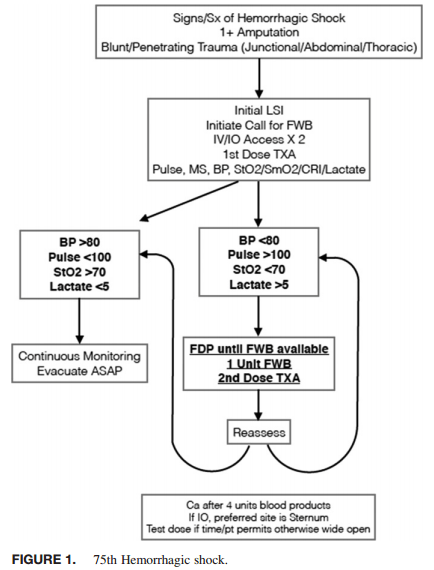
This article is a nice review of where we are (U.S. – and Norwegian – SOF) now in implementing a FWB program. It also gives good background and a simple algorithm of when to pull the trigger to initiate FWB transfusions.
In PFC, we may not have the luxury of confirmed typing and anti-A, anti-B titering, but rapid screening and typing at the point of care, as per the TMEPs protocol, should be adequate for “contingency” use of FWB.
Sean
Huge thanks to the authors of this article for educating our community:
MAJ Andrew D. Fisher, SP USA; MAJ Ethan A. Miles, MC USA; LTC Andrew P. Cap, MC USA; CDR Geir Strandenes, MC; COL Shawn F. Kane, MC USA
Abstract: Recently the Committee on Tactical Combat Casualty Care changed the guidelines on fluid use in hemorrhagic shock. The current strategy for treating hemorrhagic shock is based on early use of components: Packed Red Blood Cells (PRBCs), Fresh Frozen Plasma (FFP) and platelets in a 1:1:1 ratio. We suggest that lack of components to mimic whole blood functionality favors the use of Fresh Whole Blood in managing hemorrhagic shock on the battlefield. We present a safe and practical approach for it’s use at the point of injury in the combat environment called Tactical Damage Control Resuscitation. We describe pre-deployment preparation, assessment of hemorrhagic shock, and collection and transfusion of fresh whole blood at the point of injury. By approaching shock with the goal of replacing what has been lost (blood), it may possible to extend the period of survivability in combat casualties.
Click below to read the entire article:
Tactical Damage Control Resuscitation July 2015
75th Ranger Regiment TDCR Algorithm:


Be sure to check out www.rdcr.org for more blood transfusion resources